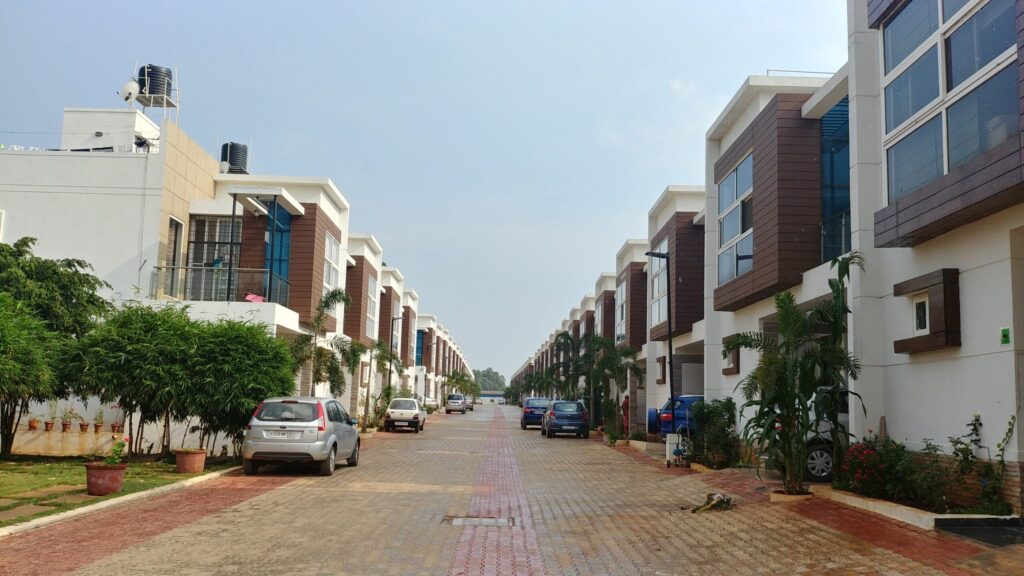
The Rise of IVY County: Bengaluru’s Fastest-Growing Connected Corridor
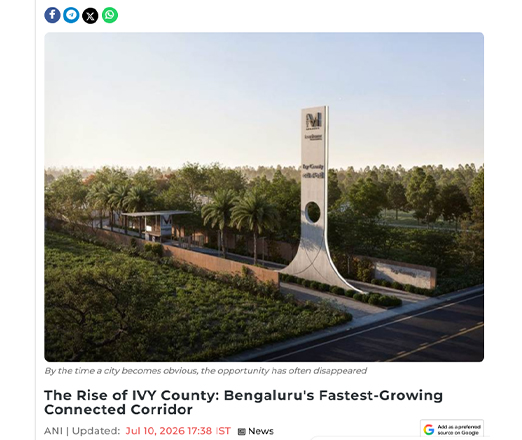
Bangalore (Karnataka) [India], July 10: The tallest buildings, the busiest roads, and the most expensive neighbourhoods usually represent the final chapter of growth, not the beginning of it. The earliest signs of wealth creation often emerge quietly–in the form of new roads, expanding metro lines, employment corridors, and land that sits at the center of future development. Read More…
The Rise of IVY County: Bengaluru’s Fastest-Growing Connected Corridor
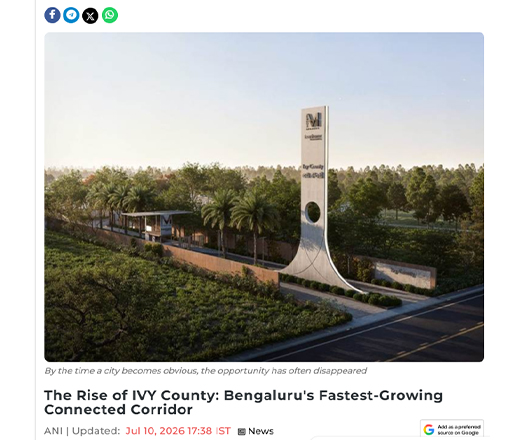
Bangalore (Karnataka) [India], July 10: The tallest buildings, the busiest roads, and the most expensive neighbourhoods usually represent the final chapter of growth, not the beginning of it. The earliest signs of wealth creation often emerge quietly–in the form of new roads, expanding metro lines, employment corridors, and land that sits at the center of future development. Read More…
10 Essential Documents to Check Before Buying a Plot in Bengaluru

Buying a plot is one of the most important financial decisions you’ll make—whether you’re planning to build your dream home or invest for long-term appreciation. While location, pricing, and future growth potential are key factors, verifying the property’s legal documents is equally critical. In Bengaluru, especially across fast-growing locations like Gunjur, Sarjapur, Varthur, and other emerging corridors, buyers are increasingly prioritizing legal transparency before making an investment. A careful document verification process can protect you from ownership disputes, legal complications, and unexpected financial liabilities. Here’s a comprehensive checklist of the 10 essential documents every plot buyer should verify before purchasing land. 1. Sale Deed The Sale Deed is the most important legal document in any property transaction. It establishes the ownership of the plot and confirms that the seller has the legal right to transfer the property. Why it matters: A valid Sale Deed serves as proof of ownership. Without it, your ownership rights may be challenged in the future. 2. Mother Deed The Mother Deed traces the complete ownership history of the property from its origin to the present owner. Why it matters: It helps confirm that ownership has been legally transferred over the years without disputes or irregularities. 3. Layout Approval Certificate Before purchasing a plot, verify whether the layout has been approved by the relevant planning authority, such as BDA or BMRDA. Why it matters: An approved layout provides greater legal assurance and simplifies the process of obtaining building permissions and bank loans. 4. RERA Registration If the plotted development falls under the Real Estate (Regulation and Development) Act (RERA), ask for the project’s RERA registration details. Why it matters: RERA promotes transparency, accountability, and timely project delivery while protecting the interests of homebuyers. 5. Encumbrance Certificate (EC) The Encumbrance Certificate confirms whether the property has any existing loans, mortgages, legal disputes, or financial liabilities. Why it matters: A clear EC indicates that the property is free from financial encumbrances during the specified period. 6. RTC (Record of Rights, Tenancy & Crops) The RTC is an official government record containing details about land ownership, land classification, cultivation history, and tenancy. Why it matters: It helps verify the ownership status and nature of the land before purchase. 7. Khata Certificate & Khata Extract A Khata is an official record maintained by the local authority for taxation purposes. Why it matters: A valid Khata is essential for paying property taxes, obtaining utility connections, and applying for building approvals. However, buyers should remember that a Khata alone does not guarantee the legal status of a layout. 8. Land Conversion Certificate If the land was originally agricultural, it must be legally converted for residential use before development. Why it matters: Purchasing unconverted agricultural land for residential purposes can result in legal complications and approval issues. 9. Mutation Records Mutation records confirm that ownership has been updated in the government’s revenue records after every property transaction. Why it matters: They ensure that government records accurately reflect the current owner of the property. 10. Latest Property Tax Receipts Always request the latest property tax receipts before finalizing your purchase. Why it matters: Outstanding tax dues may become the responsibility of the new owner if they remain unpaid. Additional Questions Every Plot Buyer Should Ask Along with verifying the documents, ask the developer the following questions: Is the layout approved by the relevant authority? Is the property’s title clear and marketable? Can all approvals and legal documents be shared for verification? Is the project eligible for bank financing? Has the developer successfully completed similar projects before? A transparent developer will always be willing to provide answers and share the required documentation. Why Transparency Matters Today’s property buyers are more informed than ever before. Rather than relying solely on marketing claims, they seek legal clarity, verified approvals, and developers with a proven track record of transparency. Choosing a developer that prioritizes compliance, ethical business practices, and proper documentation significantly reduces investment risk while giving buyers greater confidence throughout the purchase journey. Why Buyers Trust Iconhomz Since 2006, Iconhomz has been shaping Bengaluru’s real estate landscape through thoughtfully planned and legally compliant plotted developments. With nearly two decades of industry experience, the company has successfully delivered 18+ projects across Bengaluru’s high-growth corridors, earning the trust of 4,000+ happy customers. As a proud member of CREDAI, Iconhomz follows the highest standards of ethical business practices, transparency, and regulatory compliance. Every project is developed with a strong focus on clear documentation, approved layouts, and customer-first values, enabling buyers to invest with greater confidence. Whether you’re buying your first plot or expanding your investment portfolio, Iconhomz is committed to making the buying experience simple, transparent, and secure. Its legacy of timely delivery, legal compliance, and thoughtfully developed communities continues to make it one of Bengaluru’s trusted names in plotted developments. Final Thoughts Buying a plot isn’t just about choosing the right location—it’s about making a safe and informed investment. By verifying these essential legal documents, you can avoid ownership disputes, hidden liabilities, approval issues, and unnecessary financial risks. Equally important is choosing a developer with a strong reputation for transparency, regulatory compliance, and customer trust. Before signing any agreement or paying a booking amount, review every document carefully. If you’re uncertain about any legal aspect, consult an experienced property lawyer. A little due diligence today can protect your investment and give you complete peace of mind for years to come. Frequently Asked Questions Is a Khata enough to prove that a plot is legally safe? No. A Khata is only one part of the verification process. Buyers should also verify the Sale Deed, Layout Approval Certificate, Encumbrance Certificate, Land Conversion Certificate, and other legal documents. Which documents are the most important when buying a plot? The Sale Deed, Layout Approval Certificate, Encumbrance Certificate (EC), Mother Deed, and Land Conversion Certificate are among the most important documents to verify before purchasing a plot. Should I verify the documents myself? Many property records are available online. However, it is always
BDA vs BMRDA vs Panchayat Approval: Which Plot Approval Is Safest in Bangalore?

BDA vs BMRDA vs Panchayat Approval: Which Plot Approval Is Safest in Bangalore? Buying a plot is one of the biggest financial decisions you’ll ever make. Whether you’re purchasing land to build your dream home or as a long-term investment, one question should always come first: “Is this plot legally safe to buy?” If you’ve been exploring plotted developments in East Bengaluru—particularly in Gunjur, Sarjapur, Varthur, Whitefield, or other fast-growing locations—you’ve probably come across terms such as BDA Approved, BMRDA Approved, and Panchayat Approved. While these approvals may sound similar, they serve different purposes and are issued by different authorities. Understanding these differences can help you avoid legal disputes, financing challenges, and costly mistakes in the future. In this guide, we’ll explain what each approval means, compare them, and highlight the documents every buyer should verify before investing in a plot. Why Plot Approval Matters Many buyers believe that having a registered Sale Deed or Khata automatically means a property is legally safe. Unfortunately, that’s not always the case. A legally compliant plotted development should typically have: Approved layout plans Clear and marketable land title Land conversion approval (where applicable) RERA registration (if applicable) Necessary infrastructure and statutory approvals Purchasing a plot in an unapproved or partially approved layout can lead to several complications, including: Difficulty obtaining bank loans Delays in building plan approvals Poor civic infrastructure Lower resale value Potential legal disputes and litigation Understanding the approving authority is therefore one of the first and most important steps before making an investment. What Is BDA Approval? The Bangalore Development Authority (BDA) is Bengaluru’s premier urban planning authority, responsible for planned development across the city. A BDA-approved layout undergoes rigorous scrutiny before approval, ensuring compliance with planning regulations, land-use policies, infrastructure standards, and statutory requirements. Because of this comprehensive approval process, BDA-approved plots are widely regarded as some of the safest and most reliable investments in Bengaluru’s real estate market. Why BDA-Approved Plots Are Highly Preferred Strong Legal & Regulatory Confidence One of the biggest advantages of buying a BDA-approved plot is the legal assurance it offers. A BDA-approved layout generally provides: A sanctioned layout plan approved by the competent planning authority. Clear and marketable land title. Proper conversion of agricultural land for residential use, wherever applicable. Compliance with building bye-laws, setback norms, Floor Area Ratio (FAR), and planning regulations from the outset. Lower risk of unauthorized layouts, regulatory violations, or future demolition actions. Easier Khata transfers with fewer A-Khata and B-Khata complications. Simpler legal due diligence, as documentation and approvals are typically more standardized than many privately developed layouts. For buyers, this translates into greater legal confidence and significantly reduced investment risk. Better Financial Security Legal clarity also provides long-term financial benefits. BDA-approved plots generally offer: Easier home loan approvals from leading banks and financial institutions. Strong resale demand because buyers perceive them as lower-risk investments. Better long-term capital appreciation, driven by planned urban growth and infrastructure certainty. Lower litigation risk, helping protect investment returns. Eligibility for certain government schemes or benefits linked to approved developments, wherever applicable. These advantages make BDA-approved plots attractive for both homebuyers and investors. Planned Infrastructure & Better Livability Unlike many unapproved layouts, BDA-approved developments are planned with long-term urban infrastructure in mind. They typically feature: Well-designed roads built according to BDA standards. Stormwater drainage systems. Underground drainage networks. Street lighting. Provision for water supply and electricity connectivity through relevant authorities such as BWSSB and BESCOM, wherever applicable. Reserved spaces for parks, schools, playgrounds, and civic amenities. Wider roads that improve accessibility and support future development. Planned infrastructure enhances not only everyday living but also the long-term value of the property. Greater Buyer Confidence BDA approval carries strong institutional credibility. Since the layout has already undergone extensive regulatory scrutiny, buyers often view these properties as safer investments. As a result, BDA-approved plots typically enjoy: Higher buyer confidence. Strong appeal among NRI investors looking for legally secure assets. Faster purchase decisions due to reduced legal uncertainty. Shorter due diligence timelines because documentation is generally more straightforward. For buyers seeking maximum legal confidence and long-term value, BDA approval remains one of the strongest indicators of a secure plotted development. What Is BMRDA Approval? The Bangalore Metropolitan Region Development Authority (BMRDA) oversees planned development in areas outside the traditional BDA limits, covering many of Bengaluru’s rapidly expanding investment corridors. Several popular locations for plotted developments now fall under BMRDA jurisdiction. A BMRDA-approved project can be an excellent investment provided that: The layout has received all statutory approvals. The land title is clear and legally marketable. Land conversion has been completed wherever required. Infrastructure commitments are fulfilled. The developer has a strong track record of delivering compliant projects. Rather than assuming BDA approval is always superior, buyers should evaluate the project’s complete legal documentation, infrastructure quality, and developer credibility. What Is a Panchayat-Approved Layout? Panchayat approvals are issued by local village authorities. Historically, many plotted developments were approved under Panchayat permissions before urban planning regulations became more structured. Today, buyers should exercise greater caution. While some Panchayat-approved projects may be legally developed, others may not meet the planning standards required by larger statutory authorities. Potential concerns include: Incomplete infrastructure. Limited home loan options. Approval-related complications. Challenges in obtaining building permissions. Future regularization issues. This does not mean every Panchayat-approved project is unsafe. However, buyers should conduct detailed legal due diligence before investing. Quick Comparison Feature BDA BMRDA Panchayat Planning Authority ✔ ✔ Local Body Bank Loan Eligibility Excellent Good Project Dependent Infrastructure Standards High High Varies Legal Confidence Very High High Moderate Buyer Confidence Very High High Moderate Resale Potential Strong Strong Project Dependent Documents Every Buyer Should Verify Regardless of the approval authority, always request copies of the following documents: Layout Approval Certificate RERA Registration (if applicable) Mother Deed Sale Deed Encumbrance Certificate (EC) RTC (Record of Rights, Tenancy & Crops) Mutation Records Khata Certificate & Extract Land Conversion Order Latest Property Tax Receipts If a developer hesitates to share these documents, treat it as a
IVY County: At the intersection of global trends and East Bengaluru’s growth story

Bengaluru’s next big real estate opportunities may not come from the city’s most crowded or expensive locations. Increasingly, they are emerging from corridors where infrastructure, technology expansion, and residential demand are growing together. Over the last few years, East Bengaluru has steadily transformed into one of the city’s most closely watched investment regions. Read More…
Why IVY County Reflects Bengaluru’s Growing Preference for Plotted Developments Over Apartments
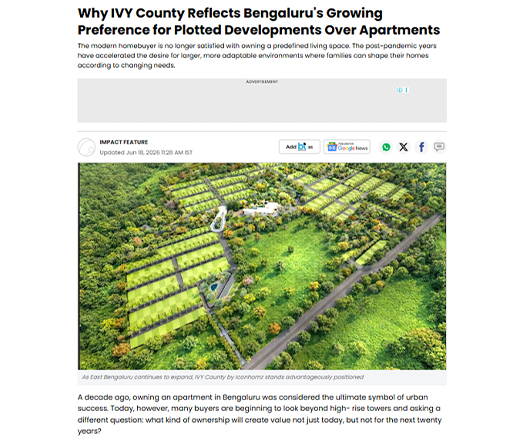
The modern homebuyer is no longer satisfied with owning a predefined living space. The post-pandemic years have accelerated the desire for larger, more adaptable environments where families can shape their homes according to changing needs. A decade ago, owning an apartment in Bengaluru was considered the ultimate symbol of urban success. Today, however, many buyers are beginning to look beyond high- rise towers and asking a different question: what kind of ownership will create value not just today, but not for the next twenty years? Read More…
IVY County: A Strategic Bet on Bengaluru’s Next Real Estate Growth Corridor

The Modern Homebuyer’s Dilemma Every ambitious city creates the same quiet conflict. The closer you move to opportunity, the farther you often move from peace. For years, Bengaluru homebuyers have had to choose between two extremes. One offered instant access to work hubs, premium social infrastructure, and urban convenience—but came with relentless traffic, congestion, and the mental fatigue of always being “in the middle of it all.” The other promised open spaces and calmer surroundings, but often at the cost of long commutes and disconnected living. Read More…
Ultimate Home Buying Checklist: A Step-by-Step Guide for Buyers

Hidden Costs When Buying a Flat: What Every Homebuyer Must Know Buying a flat is an exciting milestone, whether you’re purchasing your first home or making a real estate investment. While most buyers focus on the property’s base price, many overlook the additional expenses that come with homeownership. These hidden costs can significantly impact your overall budget if not planned for in advance. Understanding these expenses before making a purchase can help you avoid financial surprises and make informed decisions. Ultimate Home Buying Checklist: A Step-by-Step Guide for Homebuyers Buying a home is one of the most important financial and emotional decisions you’ll ever make. Whether you’re a first-time buyer or an experienced investor, the process involves multiple steps, legal verifications, financial planning, and careful evaluation. Missing even a small detail can lead to unexpected costs, project delays, or future complications. That’s why having a structured home buying checklist is essential. This guide will help you navigate the home-buying journey with confidence and make informed decisions every step of the way. 1. Define Your Budget Before you start exploring properties, determine how much you can comfortably afford. Consider: Down payment amount Home loan eligibility Monthly EMI affordability Registration charges Interior costs Emergency savings A clear budget helps narrow down options and prevents financial strain later. Quick Tip: Keep your total housing expenses within a comfortable percentage of your monthly income to maintain financial flexibility. 2. Choose the Right Location Location plays a major role in both lifestyle convenience and long-term property appreciation. Evaluate: Distance from workplace Metro connectivity Schools and colleges Hospitals Shopping centers Future infrastructure developments In Bangalore, locations such as Electronic City, Sarjapur Road, Whitefield, Bommasandra, and North Bangalore continue to attract strong buyer interest due to connectivity and employment opportunities. 3. Verify RERA Registration Always check whether the project is registered under RERA. RERA registration helps ensure: Project transparency Approved plans Construction timelines Legal compliance Buyer protection Ask for the RERA registration number and verify it through the state RERA website before making any commitment. 4. Research the Developer The reputation of the developer is as important as the property itself. Review: Completed projects Construction quality Delivery timelines Customer reviews Market reputation A trusted developer with a strong track record can significantly reduce investment risk. 5. Check Legal Documentation Before booking a property, verify all key documents. Important documents include: Title deed Land ownership records Encumbrance certificate Approved building plans Commencement certificate Occupancy certificate (for completed projects) RERA registration documents Consider consulting a legal expert for independent verification. 6. Understand the Total Cost The advertised property price is often not the final amount you’ll pay. Request a detailed cost sheet that includes: Base property cost GST (if applicable) Stamp duty Registration charges Maintenance deposit Parking charges Clubhouse fees Utility connection charges Understanding the complete financial commitment helps avoid surprises later. 7. Evaluate Connectivity and Infrastructure Future growth potential is heavily influenced by infrastructure. Assess: Metro connectivity Road access Upcoming infrastructure projects Public transportation Employment hubs nearby Properties near major infrastructure developments often experience stronger appreciation over time. 8. Review Floor Plans and Layouts A well-designed home can improve daily living and future resale value. Check: Carpet area Room dimensions Natural ventilation Natural lighting Storage space Balcony placement Functional layout Don’t focus only on square footage; usability matters equally. 9. Inspect Amenities and Community Features Modern homebuyers look beyond the apartment itself. Evaluate: Clubhouse Swimming pool Gymnasium Children’s play area Security systems Landscaped gardens Walking tracks Sports facilities Choose amenities that align with your lifestyle and family needs. 10. Understand Home Loan Options Compare multiple lenders before finalizing a home loan. Review: Interest rates Loan tenure Processing fees EMI structure Prepayment charges Loan eligibility Even a small difference in interest rates can result in significant savings over the loan tenure. 11. Check Possession Timelines For under-construction properties, carefully review: Expected completion date Construction progress Payment schedule Penalty clauses for delays Choose projects with realistic timelines and a strong execution track record. 12. Visit the Property Personally Online research is valuable, but nothing replaces an on-site visit. During your visit: Inspect construction quality Assess neighborhood development Verify connectivity claims Understand traffic conditions Experience the surroundings firsthand A site visit often reveals details that brochures and websites cannot. Home Buying Checklist Summary Before booking your dream home, ensure you’ve completed the following: ✅ Define your budget ✅ Verify RERA registration ✅ Research the developer ✅ Check legal documents ✅ Review total costs ✅ Evaluate location advantages ✅ Assess connectivity ✅ Compare home loan options ✅ Visit the property ✅ Understand possession timelines ✅ Inspect amenities ✅ Review floor plans carefully Conclusion Buying a home is a long-term investment that requires careful planning and due diligence. By following this checklist, homebuyers can reduce risks, avoid costly mistakes, and make confident decisions. At Iconhomz, we believe informed buyers make better investments. Our residential projects are designed with transparency, quality construction, strategic locations, and long-term value in mind. If you’re planning to buy a home in Bangalore, take the time to evaluate every aspect carefully and choose a property that supports both your lifestyle and future goals.
Hidden Costs When Buying a Flat: What Every Homebuyer Must Know

Hidden Costs When Buying a Flat: What Every Homebuyer Must Know Buying a flat is an exciting milestone, whether you’re purchasing your first home or making a real estate investment. While most buyers focus on the property’s base price, many overlook the additional expenses that come with homeownership. These hidden costs can significantly impact your overall budget if not planned for in advance. Understanding these expenses before making a purchase can help you avoid financial surprises and make informed decisions. Why Hidden Costs Matter When evaluating a property, many buyers compare only the advertised price. However, the actual cost of ownership includes several mandatory and optional charges beyond the property’s sale value. These additional expenses can add anywhere between 8% and 15% to the overall cost of the property, depending on the location, project, and financing method. Let’s explore the most common hidden costs every homebuyer should consider. 1. Stamp Duty and Registration Charges One of the largest additional expenses when buying a flat is stamp duty and registration. These government charges are mandatory for legally transferring ownership of the property. The amount varies based on: State regulations Property value Buyer category Location Many first-time buyers underestimate these charges while planning their budget. 2. GST on Under-Construction Properties If you’re purchasing an under-construction property, Goods and Services Tax (GST) may apply depending on the project type and applicable regulations. Ready-to-move-in properties with completion certificates generally do not attract GST, making this an important factor when comparing options. Always confirm GST applicability with the developer before booking. 3. Home Loan Processing Charges Most banks and financial institutions charge processing fees when approving a home loan. These charges may include: Loan application fees Processing fees Legal verification charges Technical evaluation charges While individual fees may appear small, they can collectively add a noticeable amount to your overall costs. 4. Maintenance Deposit Many residential projects collect an advance maintenance deposit during possession. This amount is used for: Common area maintenance Security services Landscaping Facility management Clubhouse upkeep The deposit amount varies depending on the project’s amenities and maintenance policies. 5. Clubhouse and Amenity Charges Premium residential communities often offer facilities such as: Clubhouses Swimming pools Gyms Sports courts Community halls Some developers include these costs in the apartment price, while others charge separately. Always clarify whether amenity charges are included in the quoted price. 6. Parking Charges In many projects, dedicated car parking spaces are allocated separately and may involve additional charges. Depending on the project and parking type, costs may vary significantly. If your family owns multiple vehicles, parking expenses can become a substantial component of your total purchase cost. 7. Interior and Customization Costs After possession, many homeowners invest in: Modular kitchens Wardrobes Lighting fixtures False ceilings Furniture Home automation systems These expenses are rarely included in the property’s purchase price but are often necessary to make the home fully functional. Planning for interior costs early can prevent budget overruns later. 8. Utility Connection Charges New homeowners may incur charges for utility setup, including: Electricity connection Water connection Gas connection Internet installation These costs are generally minor compared to the property price but should still be considered. 9. Legal and Documentation Expenses Many buyers choose to conduct independent legal verification before completing a property transaction. These expenses may include: Legal consultation fees Documentation review Property due diligence Agreement verification Although optional, legal verification can provide peace of mind and reduce future risks. 10. Property Tax and Ongoing Ownership Costs Property ownership involves recurring expenses that continue after possession. These include: Property taxes Monthly maintenance charges Utility bills Insurance premiums Repair and upkeep costs Factoring these ongoing expenses into your financial planning is essential for long-term affordability. Tips to Avoid Budget Surprises Before booking a flat, buyers should: Request a detailed cost sheet from the developer Verify all statutory charges Confirm parking and amenity costs Understand maintenance policies Account for interior expenses Review home loan-related charges Plan for registration and stamp duty A transparent cost breakdown allows buyers to evaluate properties accurately and avoid unexpected financial commitments. Conclusion Buying a flat involves more than just paying the advertised property price. From stamp duty and registration fees to maintenance deposits, parking charges, and interior costs, several additional expenses contribute to the overall investment. By understanding these hidden costs in advance, homebuyers can make smarter decisions, plan their finances effectively, and enjoy a smoother home-buying experience. At Iconhomz, we believe transparency is essential to building trust. We encourage homebuyers to evaluate all costs carefully and make informed decisions when choosing their dream home. Looking for a thoughtfully planned residential project in Bangalore? Explore Iconhomz developments that combine quality construction, strategic locations, and long-term value for modern homebuyers.
How RERA Protects Homebuyers in India: Complete 2026 Guide

How RERA Protects Homebuyers in India: Complete 2026 Guide Buying a home is one of the most significant financial decisions a person makes. However, before the introduction of the Real Estate (Regulation and Development) Act, commonly known as RERA, homebuyers often faced challenges such as project delays, misleading advertisements, hidden charges, and lack of transparency from developers. To address these concerns and bring greater accountability to the real estate sector, the Government of India introduced RERA in 2016. Today, RERA serves as an important safeguard for homebuyers by ensuring transparency, timely project delivery, and legal protection throughout the property-buying journey. If you’re planning to purchase a home, understanding how RERA protects buyers can help you make informed and confident decisions. What is RERA? The Real Estate (Regulation and Development) Act, 2016 was introduced to regulate the real estate sector and protect the interests of homebuyers. Under RERA, developers must register eligible residential and commercial projects with the respective state RERA authority before marketing or selling units. The primary objective of RERA is to increase transparency, reduce fraudulent practices, and establish accountability across the real estate industry. 1. Mandatory Project Registration One of the biggest advantages of RERA is that developers must register qualifying projects before advertising or selling properties. This registration requires developers to provide important project details such as: Project layout plans Approvals and permissions Construction timelines Land ownership details Project specifications This allows buyers to verify project information before making an investment. 2. Greater Transparency for Homebuyers Prior to RERA, many buyers relied solely on marketing materials and verbal commitments. RERA requires developers to disclose accurate project information through official registration records. Buyers can review details such as: Project status Approved plans Completion timelines Number of units Developer information This transparency helps buyers make better decisions and reduces the risk of misinformation. 3. Protection Against Project Delays Project delays were one of the most common concerns faced by homebuyers in the past. Under RERA, developers are legally obligated to complete projects within the promised timeline. If a project is delayed without valid reasons, buyers may be entitled to compensation or refunds as per applicable regulations. This provision encourages timely project execution and increases accountability across the industry. 4. Financial Discipline and Fund Protection RERA requires developers to deposit a significant portion of project funds into a dedicated escrow account. These funds can only be used for construction and land-related expenses associated with that specific project. This helps prevent the diversion of buyer funds to unrelated developments and improves project completion reliability. 5. Standardized Carpet Area Calculation Before RERA, buyers often faced confusion regarding property measurements due to varying definitions of saleable area, super built-up area, and carpet area. RERA introduced a standardized definition of carpet area, ensuring that buyers understand the actual usable space they are purchasing. This creates greater clarity and prevents misleading representations regarding apartment sizes. 6. Protection from False Advertising Developers are legally responsible for the claims made in project advertisements and promotional materials. If a buyer discovers that delivered specifications differ significantly from what was promised, they may have legal recourse under RERA. This encourages developers to maintain transparency and accuracy in their marketing communications. 7. Faster Dispute Resolution RERA established dedicated authorities and appellate tribunals to address disputes between developers and buyers. Instead of lengthy legal battles, buyers now have access to a structured mechanism for resolving issues related to: Project delays Refund requests Misrepresentation Contract violations Possession-related concerns This significantly improves consumer protection within the real estate sector. 8. Increased Accountability for Developers RERA has raised industry standards by holding developers accountable for project commitments. Builders are required to: Provide accurate project information Follow approved plans Deliver projects within committed timelines Comply with regulatory requirements This has improved trust and professionalism across the real estate market. Why RERA Matters for Homebuyers Today In today’s real estate market, RERA has become an essential tool for protecting buyers and promoting transparency. When purchasing a home, buyers should always: Verify RERA registration details Review project approvals Understand possession timelines Check developer credentials Evaluate project specifications carefully Choosing a RERA-registered project provides greater confidence and legal protection throughout the home-buying process. Conclusion RERA has transformed India’s real estate sector by creating a more transparent, accountable, and buyer-friendly environment. From ensuring project registration and protecting buyer funds to reducing delays and providing dispute resolution mechanisms, the Act has significantly strengthened consumer rights. For homebuyers, investing in a RERA-registered property is an important step toward minimizing risk and ensuring a safer purchasing experience. At Iconhomz, we believe transparency, quality, and customer trust are the foundations of successful real estate development. We encourage every homebuyer to understand RERA provisions and make informed decisions when investing in their dream home. Looking for a thoughtfully planned home in Bangalore? Explore Iconhomz residential projects designed with quality construction, strategic locations, and long-term value in mind.