IVY County: At the intersection of global trends and East Bengaluru’s growth story
Bengaluru’s next big real estate opportunities may not come from the city’s most crowded or expensive locations. Increasingly, they are emerging from corridors where infrastructure, technology expansion, and residential demand are growing together. Over the last few years, East Bengaluru has steadily transformed into one of the city’s most closely watched investment regions. Read More…
Why IVY County Reflects Bengaluru’s Growing Preference for Plotted Developments Over Apartments
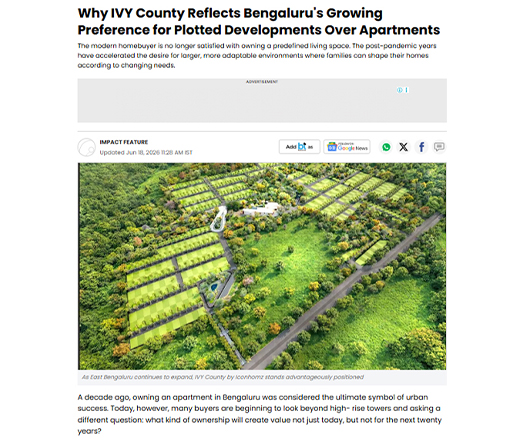
The modern homebuyer is no longer satisfied with owning a predefined living space. The post-pandemic years have accelerated the desire for larger, more adaptable environments where families can shape their homes according to changing needs. A decade ago, owning an apartment in Bengaluru was considered the ultimate symbol of urban success. Today, however, many buyers are beginning to look beyond high- rise towers and asking a different question: what kind of ownership will create value not just today, but not for the next twenty years? Read More…
IVY County: A Strategic Bet on Bengaluru’s Next Real Estate Growth Corridor

The Modern Homebuyer’s Dilemma Every ambitious city creates the same quiet conflict. The closer you move to opportunity, the farther you often move from peace. For years, Bengaluru homebuyers have had to choose between two extremes. One offered instant access to work hubs, premium social infrastructure, and urban convenience—but came with relentless traffic, congestion, and the mental fatigue of always being “in the middle of it all.” The other promised open spaces and calmer surroundings, but often at the cost of long commutes and disconnected living. Read More…
Ultimate Home Buying Checklist: A Step-by-Step Guide for Buyers

Hidden Costs When Buying a Flat: What Every Homebuyer Must Know Buying a flat is an exciting milestone, whether you’re purchasing your first home or making a real estate investment. While most buyers focus on the property’s base price, many overlook the additional expenses that come with homeownership. These hidden costs can significantly impact your overall budget if not planned for in advance. Understanding these expenses before making a purchase can help you avoid financial surprises and make informed decisions. Ultimate Home Buying Checklist: A Step-by-Step Guide for Homebuyers Buying a home is one of the most important financial and emotional decisions you’ll ever make. Whether you’re a first-time buyer or an experienced investor, the process involves multiple steps, legal verifications, financial planning, and careful evaluation. Missing even a small detail can lead to unexpected costs, project delays, or future complications. That’s why having a structured home buying checklist is essential. This guide will help you navigate the home-buying journey with confidence and make informed decisions every step of the way. 1. Define Your Budget Before you start exploring properties, determine how much you can comfortably afford. Consider: Down payment amount Home loan eligibility Monthly EMI affordability Registration charges Interior costs Emergency savings A clear budget helps narrow down options and prevents financial strain later. Quick Tip: Keep your total housing expenses within a comfortable percentage of your monthly income to maintain financial flexibility. 2. Choose the Right Location Location plays a major role in both lifestyle convenience and long-term property appreciation. Evaluate: Distance from workplace Metro connectivity Schools and colleges Hospitals Shopping centers Future infrastructure developments In Bangalore, locations such as Electronic City, Sarjapur Road, Whitefield, Bommasandra, and North Bangalore continue to attract strong buyer interest due to connectivity and employment opportunities. 3. Verify RERA Registration Always check whether the project is registered under RERA. RERA registration helps ensure: Project transparency Approved plans Construction timelines Legal compliance Buyer protection Ask for the RERA registration number and verify it through the state RERA website before making any commitment. 4. Research the Developer The reputation of the developer is as important as the property itself. Review: Completed projects Construction quality Delivery timelines Customer reviews Market reputation A trusted developer with a strong track record can significantly reduce investment risk. 5. Check Legal Documentation Before booking a property, verify all key documents. Important documents include: Title deed Land ownership records Encumbrance certificate Approved building plans Commencement certificate Occupancy certificate (for completed projects) RERA registration documents Consider consulting a legal expert for independent verification. 6. Understand the Total Cost The advertised property price is often not the final amount you’ll pay. Request a detailed cost sheet that includes: Base property cost GST (if applicable) Stamp duty Registration charges Maintenance deposit Parking charges Clubhouse fees Utility connection charges Understanding the complete financial commitment helps avoid surprises later. 7. Evaluate Connectivity and Infrastructure Future growth potential is heavily influenced by infrastructure. Assess: Metro connectivity Road access Upcoming infrastructure projects Public transportation Employment hubs nearby Properties near major infrastructure developments often experience stronger appreciation over time. 8. Review Floor Plans and Layouts A well-designed home can improve daily living and future resale value. Check: Carpet area Room dimensions Natural ventilation Natural lighting Storage space Balcony placement Functional layout Don’t focus only on square footage; usability matters equally. 9. Inspect Amenities and Community Features Modern homebuyers look beyond the apartment itself. Evaluate: Clubhouse Swimming pool Gymnasium Children’s play area Security systems Landscaped gardens Walking tracks Sports facilities Choose amenities that align with your lifestyle and family needs. 10. Understand Home Loan Options Compare multiple lenders before finalizing a home loan. Review: Interest rates Loan tenure Processing fees EMI structure Prepayment charges Loan eligibility Even a small difference in interest rates can result in significant savings over the loan tenure. 11. Check Possession Timelines For under-construction properties, carefully review: Expected completion date Construction progress Payment schedule Penalty clauses for delays Choose projects with realistic timelines and a strong execution track record. 12. Visit the Property Personally Online research is valuable, but nothing replaces an on-site visit. During your visit: Inspect construction quality Assess neighborhood development Verify connectivity claims Understand traffic conditions Experience the surroundings firsthand A site visit often reveals details that brochures and websites cannot. Home Buying Checklist Summary Before booking your dream home, ensure you’ve completed the following: ✅ Define your budget ✅ Verify RERA registration ✅ Research the developer ✅ Check legal documents ✅ Review total costs ✅ Evaluate location advantages ✅ Assess connectivity ✅ Compare home loan options ✅ Visit the property ✅ Understand possession timelines ✅ Inspect amenities ✅ Review floor plans carefully Conclusion Buying a home is a long-term investment that requires careful planning and due diligence. By following this checklist, homebuyers can reduce risks, avoid costly mistakes, and make confident decisions. At Iconhomz, we believe informed buyers make better investments. Our residential projects are designed with transparency, quality construction, strategic locations, and long-term value in mind. If you’re planning to buy a home in Bangalore, take the time to evaluate every aspect carefully and choose a property that supports both your lifestyle and future goals.
Hidden Costs When Buying a Flat: What Every Homebuyer Must Know

Hidden Costs When Buying a Flat: What Every Homebuyer Must Know Buying a flat is an exciting milestone, whether you’re purchasing your first home or making a real estate investment. While most buyers focus on the property’s base price, many overlook the additional expenses that come with homeownership. These hidden costs can significantly impact your overall budget if not planned for in advance. Understanding these expenses before making a purchase can help you avoid financial surprises and make informed decisions. Why Hidden Costs Matter When evaluating a property, many buyers compare only the advertised price. However, the actual cost of ownership includes several mandatory and optional charges beyond the property’s sale value. These additional expenses can add anywhere between 8% and 15% to the overall cost of the property, depending on the location, project, and financing method. Let’s explore the most common hidden costs every homebuyer should consider. 1. Stamp Duty and Registration Charges One of the largest additional expenses when buying a flat is stamp duty and registration. These government charges are mandatory for legally transferring ownership of the property. The amount varies based on: State regulations Property value Buyer category Location Many first-time buyers underestimate these charges while planning their budget. 2. GST on Under-Construction Properties If you’re purchasing an under-construction property, Goods and Services Tax (GST) may apply depending on the project type and applicable regulations. Ready-to-move-in properties with completion certificates generally do not attract GST, making this an important factor when comparing options. Always confirm GST applicability with the developer before booking. 3. Home Loan Processing Charges Most banks and financial institutions charge processing fees when approving a home loan. These charges may include: Loan application fees Processing fees Legal verification charges Technical evaluation charges While individual fees may appear small, they can collectively add a noticeable amount to your overall costs. 4. Maintenance Deposit Many residential projects collect an advance maintenance deposit during possession. This amount is used for: Common area maintenance Security services Landscaping Facility management Clubhouse upkeep The deposit amount varies depending on the project’s amenities and maintenance policies. 5. Clubhouse and Amenity Charges Premium residential communities often offer facilities such as: Clubhouses Swimming pools Gyms Sports courts Community halls Some developers include these costs in the apartment price, while others charge separately. Always clarify whether amenity charges are included in the quoted price. 6. Parking Charges In many projects, dedicated car parking spaces are allocated separately and may involve additional charges. Depending on the project and parking type, costs may vary significantly. If your family owns multiple vehicles, parking expenses can become a substantial component of your total purchase cost. 7. Interior and Customization Costs After possession, many homeowners invest in: Modular kitchens Wardrobes Lighting fixtures False ceilings Furniture Home automation systems These expenses are rarely included in the property’s purchase price but are often necessary to make the home fully functional. Planning for interior costs early can prevent budget overruns later. 8. Utility Connection Charges New homeowners may incur charges for utility setup, including: Electricity connection Water connection Gas connection Internet installation These costs are generally minor compared to the property price but should still be considered. 9. Legal and Documentation Expenses Many buyers choose to conduct independent legal verification before completing a property transaction. These expenses may include: Legal consultation fees Documentation review Property due diligence Agreement verification Although optional, legal verification can provide peace of mind and reduce future risks. 10. Property Tax and Ongoing Ownership Costs Property ownership involves recurring expenses that continue after possession. These include: Property taxes Monthly maintenance charges Utility bills Insurance premiums Repair and upkeep costs Factoring these ongoing expenses into your financial planning is essential for long-term affordability. Tips to Avoid Budget Surprises Before booking a flat, buyers should: Request a detailed cost sheet from the developer Verify all statutory charges Confirm parking and amenity costs Understand maintenance policies Account for interior expenses Review home loan-related charges Plan for registration and stamp duty A transparent cost breakdown allows buyers to evaluate properties accurately and avoid unexpected financial commitments. Conclusion Buying a flat involves more than just paying the advertised property price. From stamp duty and registration fees to maintenance deposits, parking charges, and interior costs, several additional expenses contribute to the overall investment. By understanding these hidden costs in advance, homebuyers can make smarter decisions, plan their finances effectively, and enjoy a smoother home-buying experience. At Iconhomz, we believe transparency is essential to building trust. We encourage homebuyers to evaluate all costs carefully and make informed decisions when choosing their dream home. Looking for a thoughtfully planned residential project in Bangalore? Explore Iconhomz developments that combine quality construction, strategic locations, and long-term value for modern homebuyers.
How RERA Protects Homebuyers in India: Complete 2026 Guide

How RERA Protects Homebuyers in India: Complete 2026 Guide Buying a home is one of the most significant financial decisions a person makes. However, before the introduction of the Real Estate (Regulation and Development) Act, commonly known as RERA, homebuyers often faced challenges such as project delays, misleading advertisements, hidden charges, and lack of transparency from developers. To address these concerns and bring greater accountability to the real estate sector, the Government of India introduced RERA in 2016. Today, RERA serves as an important safeguard for homebuyers by ensuring transparency, timely project delivery, and legal protection throughout the property-buying journey. If you’re planning to purchase a home, understanding how RERA protects buyers can help you make informed and confident decisions. What is RERA? The Real Estate (Regulation and Development) Act, 2016 was introduced to regulate the real estate sector and protect the interests of homebuyers. Under RERA, developers must register eligible residential and commercial projects with the respective state RERA authority before marketing or selling units. The primary objective of RERA is to increase transparency, reduce fraudulent practices, and establish accountability across the real estate industry. 1. Mandatory Project Registration One of the biggest advantages of RERA is that developers must register qualifying projects before advertising or selling properties. This registration requires developers to provide important project details such as: Project layout plans Approvals and permissions Construction timelines Land ownership details Project specifications This allows buyers to verify project information before making an investment. 2. Greater Transparency for Homebuyers Prior to RERA, many buyers relied solely on marketing materials and verbal commitments. RERA requires developers to disclose accurate project information through official registration records. Buyers can review details such as: Project status Approved plans Completion timelines Number of units Developer information This transparency helps buyers make better decisions and reduces the risk of misinformation. 3. Protection Against Project Delays Project delays were one of the most common concerns faced by homebuyers in the past. Under RERA, developers are legally obligated to complete projects within the promised timeline. If a project is delayed without valid reasons, buyers may be entitled to compensation or refunds as per applicable regulations. This provision encourages timely project execution and increases accountability across the industry. 4. Financial Discipline and Fund Protection RERA requires developers to deposit a significant portion of project funds into a dedicated escrow account. These funds can only be used for construction and land-related expenses associated with that specific project. This helps prevent the diversion of buyer funds to unrelated developments and improves project completion reliability. 5. Standardized Carpet Area Calculation Before RERA, buyers often faced confusion regarding property measurements due to varying definitions of saleable area, super built-up area, and carpet area. RERA introduced a standardized definition of carpet area, ensuring that buyers understand the actual usable space they are purchasing. This creates greater clarity and prevents misleading representations regarding apartment sizes. 6. Protection from False Advertising Developers are legally responsible for the claims made in project advertisements and promotional materials. If a buyer discovers that delivered specifications differ significantly from what was promised, they may have legal recourse under RERA. This encourages developers to maintain transparency and accuracy in their marketing communications. 7. Faster Dispute Resolution RERA established dedicated authorities and appellate tribunals to address disputes between developers and buyers. Instead of lengthy legal battles, buyers now have access to a structured mechanism for resolving issues related to: Project delays Refund requests Misrepresentation Contract violations Possession-related concerns This significantly improves consumer protection within the real estate sector. 8. Increased Accountability for Developers RERA has raised industry standards by holding developers accountable for project commitments. Builders are required to: Provide accurate project information Follow approved plans Deliver projects within committed timelines Comply with regulatory requirements This has improved trust and professionalism across the real estate market. Why RERA Matters for Homebuyers Today In today’s real estate market, RERA has become an essential tool for protecting buyers and promoting transparency. When purchasing a home, buyers should always: Verify RERA registration details Review project approvals Understand possession timelines Check developer credentials Evaluate project specifications carefully Choosing a RERA-registered project provides greater confidence and legal protection throughout the home-buying process. Conclusion RERA has transformed India’s real estate sector by creating a more transparent, accountable, and buyer-friendly environment. From ensuring project registration and protecting buyer funds to reducing delays and providing dispute resolution mechanisms, the Act has significantly strengthened consumer rights. For homebuyers, investing in a RERA-registered property is an important step toward minimizing risk and ensuring a safer purchasing experience. At Iconhomz, we believe transparency, quality, and customer trust are the foundations of successful real estate development. We encourage every homebuyer to understand RERA provisions and make informed decisions when investing in their dream home. Looking for a thoughtfully planned home in Bangalore? Explore Iconhomz residential projects designed with quality construction, strategic locations, and long-term value in mind.
Namma Metro Expansion Impact on Bangalore Property Prices

How Namma Metro Expansion Will Impact Property Prices in Bangalore Bangalore’s real estate market has consistently evolved alongside the city’s infrastructure growth. Among all recent developments, the expansion of the Namma Metro network is proving to be one of the biggest drivers of residential property demand and price appreciation. As metro connectivity reaches newer parts of the city, homebuyers and investors are increasingly prioritizing locations that offer easy access to metro stations. For anyone considering buying a home or investing in Bangalore real estate, understanding the impact of metro expansion is essential. Why Metro Connectivity Matters in Real Estate Infrastructure and connectivity have always played a major role in determining property values. Areas with better transportation networks generally experience higher demand because residents can travel more efficiently to workplaces, schools, healthcare facilities, and entertainment hubs. The Namma Metro has transformed daily commuting across Bangalore by reducing travel times, minimizing traffic-related stress, and improving accessibility between residential and commercial zones. Properties located near metro stations often enjoy: Better connectivity Increased buyer demand Higher rental potential Faster capital appreciation Improved quality of life As a result, metro-connected locations are becoming some of the most sought-after residential destinations in Bangalore. Impact of Namma Metro Expansion on Property Prices 1. Increased Property Appreciation Historically, areas that receive metro connectivity witness a significant increase in property values. As infrastructure improves, demand from both homebuyers and investors rises, leading to steady appreciation over time. In Bangalore, several micro-markets have already experienced notable growth following metro announcements and operational launches. Industry trends suggest that properties located within 1–3 kilometres of metro stations generally outperform areas with limited public transportation options. 2. Growing Demand from Homebuyers Today’s homebuyers are looking beyond just apartment amenities. Connectivity has become a major deciding factor when selecting a property. Families prefer locations where daily commuting becomes easier and more predictable. Professionals working in major employment hubs such as Electronic City, Whitefield, Outer Ring Road, and Sarjapur Road are increasingly choosing homes that provide convenient metro access. This shift in buyer preferences directly contributes to stronger demand and higher property values. 3. Higher Rental Potential Metro connectivity significantly improves rental demand. Tenants are often willing to pay a premium for homes located near metro stations because of the convenience and savings in travel time. Investors looking for rental income opportunities can benefit from properties situated near metro corridors, particularly in rapidly developing residential markets across South and East Bangalore. 4. Development of Emerging Locations One of the most important effects of metro expansion is the transformation of emerging localities into established residential destinations. Areas that were previously considered peripheral markets gain attention from developers, businesses, and homebuyers once metro connectivity becomes available. This creates new investment opportunities and contributes to long-term property appreciation. South Bangalore and the Metro Advantage South Bangalore continues to be one of the biggest beneficiaries of ongoing metro expansion projects. Locations such as Electronic City, Bommasandra, and surrounding residential corridors are witnessing growing interest due to improved connectivity and infrastructure development. The upcoming metro network is expected to strengthen accessibility between residential communities and major employment centres, making these areas even more attractive for homebuyers. For buyers seeking long-term value, properties located near metro-connected corridors often provide a strong combination of lifestyle convenience and investment potential. Why Investors Should Pay Attention Now Infrastructure-driven real estate growth typically follows a predictable pattern. Property prices often begin rising during the planning and construction stages and continue appreciating once connectivity becomes operational. Investors who enter the market early may benefit from: Lower entry prices Future appreciation potential Increased buyer demand Stronger rental yields Improved resale opportunities As Bangalore’s metro network expands further, locations with upcoming connectivity are expected to remain among the city’s most promising real estate investment destinations. Conclusion The Namma Metro expansion is reshaping Bangalore’s real estate landscape. Improved connectivity, increased demand, higher rental potential, and long-term infrastructure growth are contributing to stronger property appreciation across multiple residential corridors. For homebuyers and investors alike, metro-connected locations represent an opportunity to secure both lifestyle advantages and long-term value. As Bangalore continues to grow, properties situated near metro networks are expected to remain highly desirable and future-ready investments. If you’re exploring premium residential opportunities in Bangalore, choosing a project with strong connectivity and future infrastructure benefits can significantly enhance both your living experience and investment returns.
IVY county and the emergence of east Bengaluru’s next premium residential belt
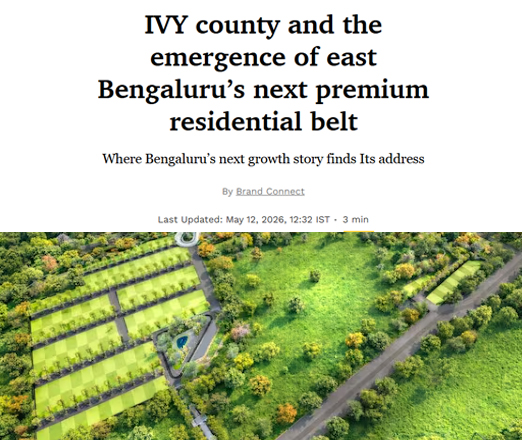
Where Bengaluru’s next growth story finds Its address Every city has a corridor that changes everything. At first, it rarely announces itself. It appears as just another stretch of road functional, familiar, and easy to overlook. But then, almost quietly, the signals begin to emerge. A metro alignment is proposed. Global corporations begin consolidating their presence nearby. Infrastructure blueprints start taking shape on the ground. New schools, hospitals, and commercial hubs start clustering around it. Investment conversations grow louder. And before the wider market fully realises what is happening, that corridor transforms into the city’s next defining address. Bengaluru has seen this pattern before. Whitefield was once considered too distant to matter. Koramangala was once outside the city’s commercial imagination. HSR Layout was once simply another developing neighbourhood. Today, they are among Bengaluru’s most valuable real estate destinations. Now, the same momentum is unfolding across East Bengaluru’s Whitefield–Varthur–Gunjur–Sarjapur corridor. No longer an emerging pocket, this stretch has become one of Bengaluru’s most strategic high-growth belts—defined by infrastructure acceleration, driven by economic expansion, and increasingly recognised as the city’s next premium plotted development zone. At the centre of this transformation sits IVY County, a Premium BDA Plotted Development at the epicenter of this high-growth corridor, thoughtfully positioned for a Bengaluru that is rapidly evolving toward 2035. This is not a project built merely for the city as it exists today. It is built for Bengaluru, which is taking shape. The Triple Engine Driving East Bengaluru’s Growth Real estate value increase does not happen randomly. The best performing residential micro-markets occur due to the coming together of three strong engines working simultaneously: job creation, infrastructure growth, and development of a lifestyle ecosystem. One such area that stands out for exhibiting all three engines is the Whitefield, Varthur, Gunjur, and Sarjapur region of Bengaluru. Employment-Led Residential Demand Bengaluru East has established itself as the most vibrant and dynamic technology and commercial corridor of the city. This sector boasts of various employment centres such as RMZ Ecoworld, Embassy Tech Village, RGA Tech Park, Oracle Tech Hub, Wipro, Infosys, Myntra, along with numerous global capability centres that have kept on expanding their presence in this corridor. With the rising popularity of the GCC in Bengaluru, this corridor is rapidly becoming a major hub for R&D labs, AI-driven enterprises, and innovation centres. The preference for Bengaluru East by the MNCs operating in India has been driven by its mature office facilities, access, and availability of skilled manpower. What does this mean for the real estate sector? Employment-led demand guarantees stable demand for residential spaces. Speculative growth is not an issue here. Here we have demand fuelled by the professionals who wish to live close to where they work. 2. Infrastructure That Is Reconfiguring Connectivity The second factor that is transforming the corridor is infrastructure. Some of the most significant transportation initiatives from Bengaluru are coming together around East Bengaluru, completely rethinking its connectivity. This includes: – Metro Phase 3A (Sarjapur – Hebbal Corridor) – Peripheral Ring Road (PRR) – Satellite Town Ring Road (STRR) – Suburban train connectivity between Whitefield and Kengeri SWIFT City is close to Sarjapur – KIADB Industrial Park between Sarjapur and Attibele. This is not just about decreasing commuting time.It is also about rewriting Bengaluru’s development trajectory. 3. An Established Social Ecosystem The third growth engine is liability. An excellent residential hub cannot depend solely on connectivity and jobs. It has to facilitate living. East Bengaluru is one such example. It is where Bengaluru’s best educational facilities are found, with Greenwood High International School, Oakridge International School, The International School Bangalore, Deens Academy, and ORCHIDS International School among them. Similarly, there is great ease when it comes to accessing healthcare, which is available at Manipal Hospital, Sakra World Hospital, Rainbow Children’s Hospital, and Sparsh Hospital. Incorporate retail outlets, entertainment venues, lifestyle options, and fine restaurants in Whitefield and Sarjapur, and you have a corridor following the global 15-minute city model. This is how the concept of convenience turns into an urban advantage in the long term. Why IVY County Is Positioned for Bengaluru’s Next Growth Chapter The future of real estate is shaped as much by location as by timing—and East Bengaluru is where both are aligning with remarkable clarity. Set at the convergence of Whitefield, Varthur, Gunjur, and Sarjapur, IVY County is strategically placed within one of the city’s most dynamic high-growth corridors, where infrastructure expansion, employment generation, and urban development are accelerating in tandem. The close location to IT hubs, Outer Ring Road, Marathahalli, Electronic City, and prime business centers guarantees an excellent linkage to Bengaluru’s most vibrant economic zones. Supporting this is a vibrant social network with premier educational institutions, famous hospitals, shopping areas, and lifestyle facilities all within a 15-minute walk from IVY County. What further strengthens its appeal is its identity as a Premium BDA Plotted Development, offering buyers the assurance of legal clarity, planned infrastructure, and stronger long-term confidence. Thoughtful design of underground utilities and water management systems adds yet another level of future-oriented planning, ensuring that IVY County is well prepared not only for what Bengaluru stands for today but also for what Bengaluru will turn into tomorrow. A Lifestyle Designed for Modern Urban Living Alongside this strategic positioning, there is a carefully crafted lifestyle concept. With International 50+ features and a 50,000 sq. ft. clubhouse, this development has created an entire residential ecosystem focused on wellness, leisure, socializing, and community living. Whether it’s the sports courts, wellness areas, or other recreational zones, the focus is on both experience and functionality. This is luxury for everyday life. The Advantage of Entering at the Right Time Among the most profitable decisions in real estate are those that are rarely made once the location reaches its peak. They come at a time when everything about it makes sense – when the development is fast-paced, businesses are flourishing, and the region has just started to become an important address of the city. East Bengaluru finds itself in exactly such a scenario now. Over the past few years, property prices in this corridor have appreciated by nearly 79%, highlighting
Bangalore: India’s Strongest Real Estate Market

Bangalore has consistently established itself as one of India’s most resilient and high-growth real estate markets. Unlike many other metropolitan cities, the demand here is not driven by speculation alone, but by strong fundamentals such as IT employment, infrastructure development, and long-term migration of skilled professionals. Over the last decade, the city has transformed from a traditional metro into a global technology and innovation hub, making it one of the most attractive destinations for both end-users and real estate investors. Today, Bangalore’s housing market continues to evolve rapidly, with a clear shift towards smarter, better-planned residential developments such as those offered by Iconhomz, which focus on efficient design and modern urban living. Why Bangalore Real Estate is Growing The growth of Bangalore’s real estate market is supported by multiple strong factors that continue to drive demand year after year. 1. Expansion of IT Corridors Bangalore’s economy is largely powered by its IT sector. Key employment hubs such as: Whitefield Sarjapur Road Electronic City Outer Ring Road (ORR) corridor These zones attract thousands of professionals every year, creating continuous demand for residential properties nearby. 2. Rising Demand from Working Professionals With companies expanding their presence in Bangalore, there is a steady influx of professionals from across India. This has resulted in: Higher demand for housing near IT hubs Increased preference for ready-to-live and well-designed homes Strong rental market growth This demand directly supports long-term property appreciation. 3. Infrastructure Development Bangalore is witnessing large-scale infrastructure upgrades, including: Metro rail expansion across key corridors Road widening projects improving connectivity New flyovers and expressways Better access to suburban growth areas These improvements are making even emerging locations highly accessible, boosting real estate value. 4. Strong Rental Demand Due to the city’s large working population, Bangalore continues to have one of the strongest rental markets in India. Areas near IT hubs see: High occupancy rates Stable rental yields Consistent demand from young professionals Shift Towards Smarter Homes The modern homebuyer in Bangalore is no longer satisfied with just larger spaces. Instead, there is a clear shift towards smarter, more functional homes. Developers like Iconhomz are responding to this shift by designing space-efficient homes that maximize usability without increasing unnecessary carpet area. What Are Space-Efficient Homes? These homes are designed to: Eliminate unused or dead space Improve layout functionality Enhance natural light and ventilation Offer multi-purpose living areas This approach ensures that even compact homes feel more spacious and comfortable. Investment Advantage of Bangalore Real Estate Bangalore remains a strong investment destination due to its long-term stability and consistent demand. 1. High Appreciation Potential Properties in well-connected IT corridors have shown steady appreciation over time. With continuous infrastructure development, this trend is expected to continue. 2. Strong Rental Income Opportunities Due to high job migration, rental demand remains strong across key locations, ensuring steady cash flow for investors. 3. Stable Long-Term Demand Unlike speculative markets, Bangalore real estate is supported by real end-user demand, making it a safer long-term investment option. Emerging Buyer Preferences Modern buyers are becoming more informed and selective. Key preferences now include: Better location connectivity Functional layouts over larger size Sustainable and community living Proximity to workplaces and schools This shift is pushing developers to innovate and deliver better-designed homes, such as those found in projects by Iconhomz. Conclusion Bangalore continues to be one of the most promising real estate markets in India. With its strong IT ecosystem, rapid infrastructure development, and evolving lifestyle preferences, the city offers a balanced mix of growth, stability, and opportunity. As we move into 2026, the demand for well-planned, efficiently designed homes is only expected to increase. For both investors and homebuyers, this presents a strong opportunity to enter or expand their real estate portfolio in one of India’s most dynamic cities. Explore thoughtfully designed homes built for modern urban living at Iconhomz
Why Gunjur–Varthur Corridor is the Next Big Real Estate Hotspot in Bangalore
The Rise of Gunjur–Varthur Corridor Bangalore’s real estate landscape is constantly evolving, and the Gunjur–Varthur corridor has quickly emerged as one of the most promising micro-markets. Positioned strategically between Whitefield and Sarjapur, this zone is becoming a preferred choice for both end-users and investors. What makes this corridor even more attractive today is the emergence of well-planned developments like Ivy County Plots, which are redefining plotted living in this high-growth belt. These developments are not just land parcels—they are curated communities designed for long-term value creation. Strategic Location Advantage One of the biggest reasons behind the rapid growth of Gunjur–Varthur real estate is its unmatched location advantage. Seamless Connectivity to IT Hubs 10–15 minutes to Whitefield 20 minutes to Sarjapur Road Easy access to Outer Ring Road Well-connected to Electronic City This proximity to major IT corridors ensures a steady influx of working professionals, which directly translates into consistent housing demand. For homebuyers, this means shorter commutes and better work-life balance. For investors, it means strong rental demand and long-term capital appreciation. Infrastructure Driving Growth Infrastructure plays a critical role in determining real estate value—and Gunjur–Varthur is witnessing rapid improvements on this front. Key Developments Fueling Growth Road widening and improved connectivity Upcoming metro access in nearby zones Expansion of social infrastructure such as schools, hospitals, and retail hubs Improved civic amenities and planned developments As infrastructure expands, property prices tend to rise. Historically, areas in Bangalore that saw early infrastructure investment have delivered some of the highest returns in real estate. Gunjur–Varthur is currently at that exact inflection point. Why Gunjur–Varthur is Attracting Investors The corridor is becoming a preferred choice for investors, and the reasons are clear: Lower Entry Price Compared to Whitefield Whitefield has already reached a mature stage, with significantly higher property prices. In contrast, Gunjur–Varthur offers more attractive entry points, allowing investors to maximize returns over time. High Appreciation Potential Being an emerging micro-market, the area has room for price growth. As demand increases and infrastructure improves, property values are expected to rise steadily. Increasing Demand for Plotted Developments Modern buyers are shifting towards plotted developments due to: Flexibility to build custom homes Better long-term appreciation Lower density and more open spaces This trend is particularly strong in high-growth corridors like Gunjur–Varthur. Strategic Position Between Key Corridors The ability to access both Whitefield and Sarjapur easily makes this location highly desirable. It offers the best of both worlds—connectivity and affordability. The Growing Popularity of Villa Plots One of the biggest trends shaping the Gunjur–Varthur real estate market is the rising demand for villa plots near Whitefield and Varthur Road. Unlike apartments, plots offer: Full ownership of land Freedom to design and build Greater long-term value Lower maintenance costs For investors, this means better capital appreciation. For end-users, it means a more personalized and spacious lifestyle. As urban homebuyers become more conscious about space and quality of living, plotted developments are gaining significant traction. A Lifestyle Upgrade, Not Just an Investment While investment potential is a key driver, Gunjur–Varthur also offers a compelling lifestyle advantage. Balanced Urban Living Close to IT hubs yet away from congestion Access to essential services within short distances Increasing presence of schools, hospitals, and retail spaces This makes it ideal for families looking for a peaceful yet connected living environment. Open Spaces & Better Living Compared to densely packed city areas, this corridor offers: More greenery Lower pollution levels Better planning opportunities For many buyers, this shift towards quality of life is becoming just as important as investment returns. Final Thoughts The Gunjur–Varthur corridor is no longer just an emerging location—it is fast becoming one of Bangalore’s most strategic real estate investment zones. With its strong connectivity, ongoing infrastructure development, and increasing demand, it offers a rare combination of affordability today and appreciation tomorrow. For buyers and investors looking to stay ahead of the market, this is the right time to explore opportunities in this high-potential corridor.